

Discover how to choose ai search optimization agency paris in 2026 with evaluation criteria, questions to ask, and success metrics.
Partnering with an AI search optimization agency in Paris has moved from a forward-thinking luxury to a core business necessity. As AI Overviews and conversational models like ChatGPT change the search landscape, your brand’s visibility now hinges on being cited within these AI-generated answers, not just ranking in a list of blue links. This evolution makes specialized expertise essential right now.
Why AI Search Optimization Is Now Critical in the Paris Market
For years, the game was simple: get your website to the top of Google’s results. Today, that goal is perilously incomplete. The rise of Generative AI has inserted a new, powerful layer between users and information—the AI-generated summary.
This isn't a small tweak. It's a fundamental pivot in how people find brands and make purchasing decisions. Instead of clicking through ten blue links, they get a single, consolidated answer. If your company isn't part of that answer, you're invisible for that search. This reality is what makes finding a capable AI search optimization agency in Paris an urgent priority for any enterprise that wants to stay competitive.
The New Competitive Battleground
Your competition isn't just the other companies on the results page anymore. It’s every single source an AI model might pull from to build its answer—from industry publications and data aggregators to your rivals' product manuals. To win here, you need a completely new playbook focused on what we call Generative Engine Optimization (GEO).
This strategy is built on a few key pillars:
- Structured Data Excellence: Your site's data must be perfectly organized so AI models can easily parse, understand, and cite it.
- Authoritative Content: You need to produce deeply researched, factual content that positions your brand as a primary, trustworthy source in your field.
- Entity Optimization: This involves building a strong, interconnected digital footprint so that AI models recognize your brand, its products, and its people as significant entities.
An agency that lives and breathes this stuff knows the goal isn't just about driving clicks. It’s about shaping the AI's "worldview" and knowledge base.
The Explosive Growth of Generative Engine Optimization
The urgency here is backed by some serious numbers. The market for Generative Engine Optimization (GEO) is expected to climb from 848 million in 2025 to a massive **33.7 billion by 2034**. That's a compound annual growth rate of 50.5%.
This explosion is a direct result of AI referral traffic becoming a real-deal source of visitors, already making up 1.08% of all web traffic and climbing every month.
This isn't just another trend; it's a market-wide reorganization of how digital visibility works. I've seen early adopters achieve incredible results, with some reporting a 300-500% ROI within just 6 to 12 months of launching a dedicated GEO strategy.
This data should be a wake-up call for enterprise leaders in Paris. The window to be an early mover is closing fast. It's far easier and cheaper to secure your brand's place in AI answers now than it will be to dislodge established competitors later on. The old metrics don't quite cut it anymore, either. To get ahead of the curve, it's smart to start learning about which GEO metrics matter most for competitive visibility in AI search in 2026.
Holding off on this means you're actively choosing to give up ground. The question is no longer if your audience will use AI for search, but how prominently your brand will feature when they do. A specialized agency brings the technical know-how and strategic foresight needed to make sure you're in the conversation.
How to Evaluate an Agency's AI Optimization Capabilities
Choosing the right partner for this new era of search means changing how you vet agencies. You can't just take generic promises about "AI SEO" at face value—in fact, those are often red flags. You need to get under the hood and dissect their actual capabilities, pushing past the marketing fluff to verify their technical depth, strategic thinking, and grasp of the local Paris market.
A true AI search optimization agency in Paris won't just talk about traditional SEO. They’ll demonstrate a real, working knowledge of how AI models actually think.
Before we dive into the AI-specifics, it's helpful to have a solid grasp of what an SEO agency is in a traditional sense. This baseline understanding helps you see where the old playbook ends and where the specialized skills for this new world—often called Generative Engine Optimization (GEO)—begin.
This shift isn't just a small step forward; it's a completely new way of thinking about search.
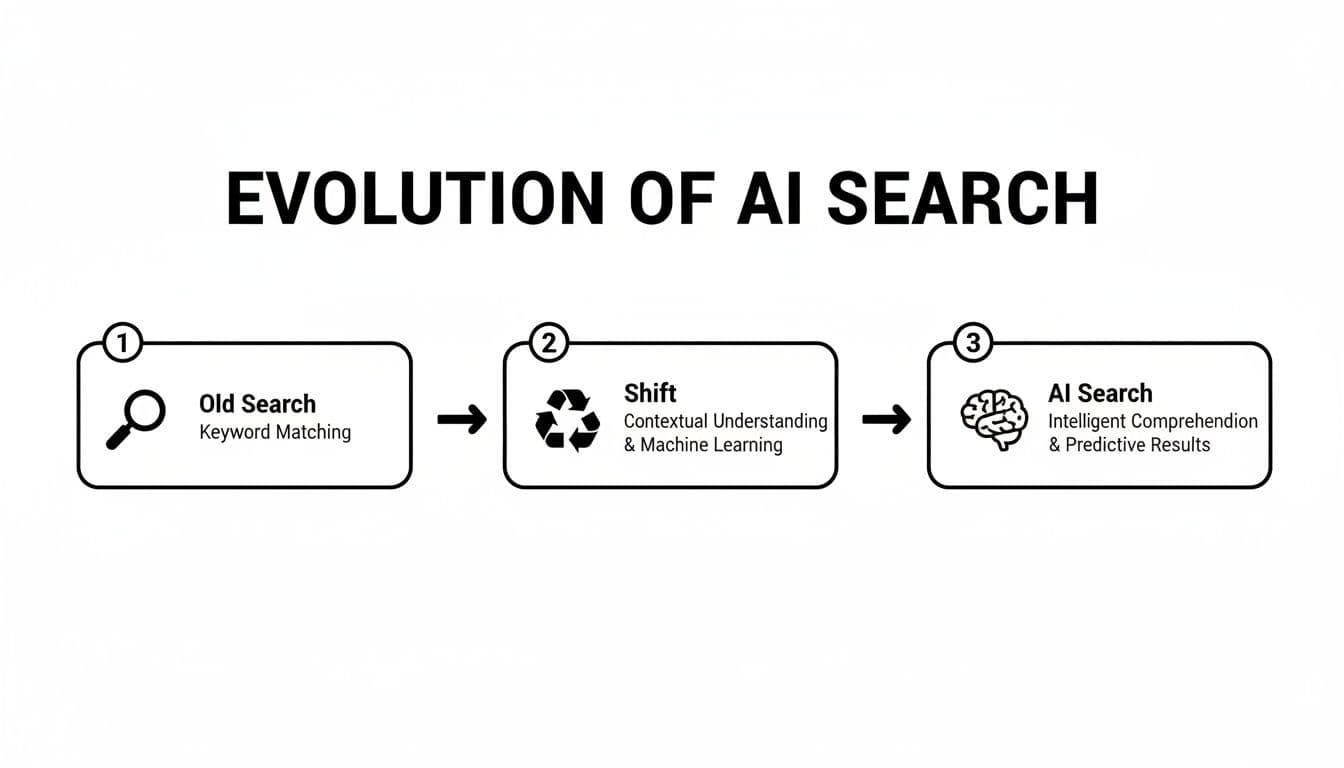
As the visual shows, we've moved beyond simple keyword matching. AI-driven search is a new category, and it demands an entirely different optimization strategy.
Judging Their Technical and Strategic Acumen
An agency’s real value is its ability to turn your business goals into technical actions that influence AI models. Don't be afraid to dig into their methodology. Their team should be able to speak fluently about more than just keywords and backlinks; they need to show a deep understanding of how models like GPT-4, Claude, and Gemini process information.
Ask them to walk you through their process for:
- Entity Reconciliation: How do they ensure an AI correctly connects your brand name with your specific products, key executives, and overall industry reputation?
- Semantic Content Optimization: This goes way beyond keyword density. How do they structure your content to directly answer user intent in a way that’s authoritative and easy for an AI to cite?
- Structured Data Implementation: Ask for concrete examples. How are they using schema markup not just for a few flashy rich snippets, but to build a comprehensive knowledge graph that an AI can easily understand and trust?
A top-tier agency will talk less about 'ranking' and more about 'informing.' Their primary goal is to make your brand’s verified information the most logical and authoritative source for an AI to use when constructing an answer.
Their familiarity with different models is also critical. An agency that only focuses on Google's AI Overviews is missing a massive part of the picture, as other platforms like Perplexity and various chatbots are driving significant, high-intent traffic.
The Agency Capability Evaluation Checklist
Use this checklist to systematically score potential partners. A strong agency will have clear, confident answers for each of these areas, while a weak one will likely give vague responses or pivot back to traditional SEO metrics.
This checklist isn't just a scorecard; it's a conversation starter. The depth and confidence of an agency's answers will tell you everything you need to know about their readiness for the AI-powered search landscape.
Data Access and Privacy Compliance in Paris
In the AI world, data is the new currency. A serious agency must have access to specialized datasets that let them analyze AI behavior at scale. They should be able to show you exactly how they track your brand’s mentions—and your competitors'—across the various AI answer engines. This is where a platform like Attensira becomes essential, providing the concrete data needed to guide and validate the strategy.
For any Paris-based enterprise, this conversation must also put a heavy spotlight on GDPR. How does the agency handle data privacy when analyzing user queries or using tools that process information? A compliant agency will have clear, documented policies for data handling, anonymization, and ensuring all their optimization work respects European privacy laws. This isn't just a legal box to tick; it’s fundamental to protecting your brand's trust.
Before you start these conversations, it’s incredibly useful to have your own house in order. Understanding your current digital footprint gives you a massive advantage. Running a baseline analysis by learning how to perform an SEO audit will empower you to ask much sharper questions and more accurately judge the solutions potential agencies propose.
Digging Deeper: The Right Questions to Ask a Potential AI Search Agency in Paris

When you're vetting a potential partner, the quality of your questions will absolutely dictate the quality of your hire. It’s time to move past surface-level queries like, "Do you do AI SEO?" That's a simple yes/no. Instead, you need to arm yourself with specific, insightful questions that slice right through marketing fluff and reveal an agency's real capabilities.
A top-tier AI search optimization agency in Paris won't just tolerate this level of scrutiny—they'll welcome it.
The whole point is to spark a conversation about their methodology, not just the outcomes they promise. A strong candidate will respond with processes, data points, and concrete examples. A weaker one will retreat into vague assurances and buzzwords. Your job is to lead the conversation and ask for tangible proof of their expertise, especially within the unique context of the French market.
Probing Their Strategic Process
First, get a handle on how they turn high-level business goals into a concrete AI optimization strategy. An agency's process, or lack thereof, is incredibly revealing. If you get generic answers, consider it a major red flag. You're listening for a clear, logical approach.
Here are a few powerful questions to get the conversation started:
- "Describe your process for finding and closing our brand's content gaps for AI visibility." A solid answer here isn't just "we'll create more content." It involves using specific AI monitoring tools to analyze the questions your audience actually asks, see which competitors are getting cited, and then map out a content plan designed to create authoritative, citable answers.
- "How do you handle entity optimization to make sure AI models correctly link our brand to our core products and expertise?" Listen for keywords like "knowledge graph," "semantic triples," and "entity reconciliation." They should be able to explain how they use structured data and consistent information across the web to build a clear and authoritative digital identity for your company.
- "What’s your strategy for optimizing across different AI models, like Google's AI Overviews versus Perplexity or ChatGPT?" This is a sophisticated question that separates the experts from the amateurs. A one-size-fits-all approach is a recipe for failure. A good agency will articulate how their content and data strategies must adapt to the unique architecture and data sources of each major AI platform.
These questions push the conversation beyond simple "rankings" and toward the real goal: becoming a trusted, go-to source for AI.
Evaluating Their Local Market Expertise
For any business focused on Paris, local expertise isn't just a nice-to-have; it's non-negotiable. AI models interpret language with cultural and regional nuances. An agency that gets this will give you a significant edge.
Zero in on their hands-on experience within the French-speaking digital world.
- "Can you walk us through a case study where you improved a client’s presence in AI answers specifically for the French-language market?" This is a direct test of relevant experience. A confident agency should be able to share (non-confidential) details about their methodology, the challenges they ran into with French-language queries, and the specific results they delivered.
- "How does your team stay on top of GDPR and other EU regulations as they apply to AI data analysis and user privacy?" This is a critical point of liability. Look for clear, documented processes for data compliance. They should speak confidently about data anonymization and ethical data handling, reassuring you that their methods protect both your customers and your business.
A truly local agency knows that Parisian users have distinct search behaviors and cultural contexts. Their strategy must show they understand how AI models process French slang, regional terms, and local consumer intent—a detail that generic international agencies almost always miss.
Measuring Performance and ROI
Finally, you have to talk about how they measure success. Traditional SEO metrics like keyword rankings and organic traffic are only one piece of the puzzle now. A forward-thinking agency will come to the table with a new set of KPIs built for the AI search era. For a bit more background, reviewing a guide on what is an SEO report can help you establish a solid baseline for what good reporting looks like.
Ask them directly:
- "How do you measure the ROI for Generative Engine Optimization beyond just traffic?" A great answer will touch on metrics like "Share of AI Voice" (how often your brand is cited versus competitors), the quality of the traffic coming from AI-driven referrals, and its ultimate conversion rate.
- "What specific tools do you use to track our brand’s visibility within AI-generated answers?" They should name specialized platforms designed for AI monitoring, like Attensira. If their answer is limited to traditional SEO tools like Ahrefs or Semrush, it’s a strong signal they may not be properly equipped to track what really matters in this new landscape.
Crafting an RFP for AI Search Optimization
Once you’ve shortlisted a few promising agencies, it’s time to move to a formal Request for Proposal (RFP). A well-thought-out RFP does far more than just compare prices. It’s your chance to see how an agency really thinks, forcing them to outline their strategy in a way you can directly compare against their competitors. This document is how you cut through the marketing fluff and get to concrete, actionable plans.
When you're hiring an AI search optimization agency in Paris, your RFP needs to be sharp. If you’re vague, you’ll get vague, unhelpful responses back. Your document must spell out your goals, the scope of the project, and your technical must-haves. This sets a high bar and quickly separates the true experts from the rest.
Start with Business Goals, Not Just SEO Metrics
Ground your RFP in what actually matters to your bottom line. "Increasing visibility" is not a business goal; it's a marketing activity. You need to get much more specific to see if an agency can connect its work to real-world results.
An effective RFP should anchor the project to tangible outcomes. For example:
- Establish our brand as the go-to, citable source for our core topics within AI-generated answers.
- Drive a 25% increase in qualified B2B leads originating from AI referral traffic over the next 12 months.
- Capture a larger "Share of AI Voice" than our top three competitors in the French market.
- Reduce inbound customer support tickets by proactively answering common questions on AI search platforms.
These kinds of specific goals force agencies to think critically. They can't just send you a generic service list; they have to show you exactly how their proposed methodology will deliver on your specific business needs.
Define the Scope of Work and Key Deliverables
This is the part where you detail precisely what you expect the agency to do. A clear Scope of Work (SOW) is your best defense against scope creep and ensures every agency is bidding on the same project. It’s the only way to make a true apples-to-apples comparison.
For an AI search optimization project, your SOW should demand, at a minimum:
- A Comprehensive AI Visibility Audit: We need a baseline analysis of our brand’s current footprint—and its gaps—across major platforms like Google's AI Overviews, Perplexity, and ChatGPT, specifically for French-language queries.
- AI Competitor Intelligence: This isn't a one-and-done task. We expect ongoing tracking of our competitors' citations and the strategies they're using to appear in generative answers.
- An AI-Optimized Content Blueprint: The agency must develop and execute a content plan built for citable authority. This means a heavy focus on entity optimization and correct structured data implementation.
- Performance Reporting That Matters: We need monthly reports that track progress against AI-specific KPIs, not just a rehash of traditional SEO metrics.
Don’t just list tasks—describe the output you expect. For the content strategy, ask for a detailed calendar that includes topics, formats, and the strategic reasoning behind each piece. For reporting, define the exact metrics you need to see.
Insist on Your Technology and Reporting Standards
To maintain full transparency and hold your future partner accountable, your RFP must clearly state your technology requirements. This is where you can mandate a specific monitoring platform, creating a single source of truth for all performance data. You can find excellent guidance on this by learning more about crafting a comprehensive SEO audit report format.
For instance, you can write a clause directly into your RFP:
Technology Mandate: "The chosen agency must use Attensira as the central platform for monitoring brand visibility, tracking competitor citations, and reporting on all AI search optimization KPIs. All performance reports submitted must be generated directly from this platform to ensure consistency and transparency."
Making this a requirement is critical. It standardizes the data and stops agencies from cherry-picking vanity metrics from various tools to make their performance look better than it is. From day one, you are in control of the data, ensuring every strategic conversation is based on a shared, verifiable reality of your performance in the new world of AI-powered search. This level of detail elevates your RFP from a simple price-shopping exercise to a true search for a strategic partner.
Measuring Success with Your New Agency Partner
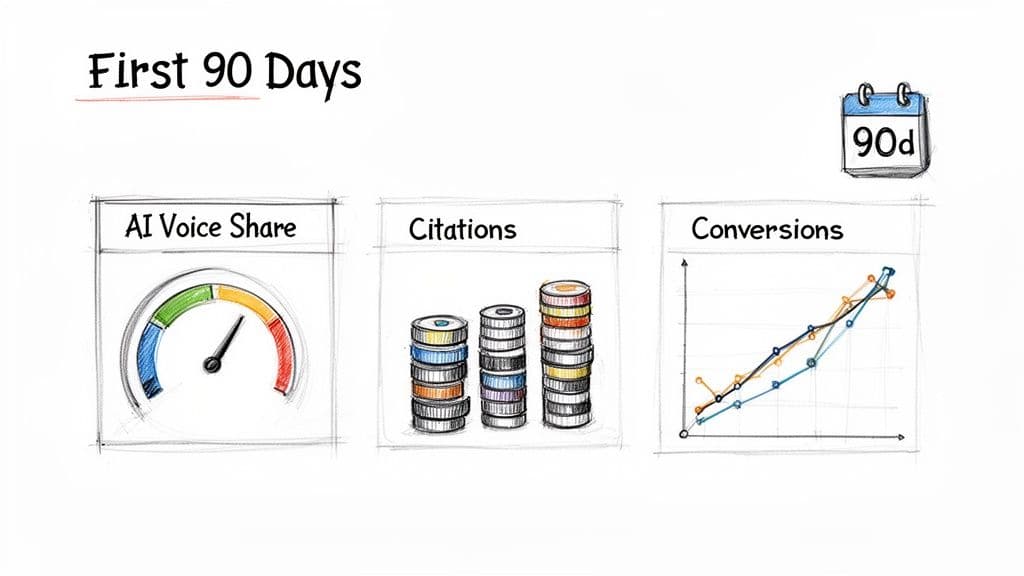
A partnership with an AI search optimization agency in Paris should be grounded in measurable results, not abstract promises. Once your agency is onboarded, the first 90 days are absolutely critical. This initial period isn't about chasing huge traffic gains; it's about laying a solid foundation for tracking, communication, and mutual accountability.
The first step is always to establish a clear baseline. Before a single new tactic is deployed, your agency must perform a comprehensive audit of your current AI visibility. This is a far cry from a standard SEO audit. Instead, it’s a deep analysis of how AI language models currently interpret and represent your brand. From experience, this is best done with a dedicated platform like Attensira to create a single source of truth from the very beginning.
This initial audit draws the starting line. It answers crucial questions: How often do AI models cite your brand for your most important topics? What’s your "Share of AI Voice" compared to your top three rivals? And what does your AI-referred traffic—and its conversion rate—look like right now, even if it’s small?
Defining Your Communication and Reporting Rhythm
With a baseline established, you can formalize the communication flow. A well-defined protocol is your best defense against misaligned expectations. We recommend setting up weekly check-ins for tactical updates and a more comprehensive monthly strategy review to discuss progress and pivot where necessary.
These meetings must be driven by data, focusing squarely on the KPIs you've agreed upon. The objective is to shift the conversation from a subjective "how are things going?" to an objective analysis of performance. This is where a top-tier agency demonstrates its true value—by turning raw numbers into strategic insights and clear next steps.
When it comes to reporting, insist on a format that ties directly back to your business objectives. A capable AI search optimization agency in Paris will provide reports that differentiate between traditional SEO metrics and the new, high-impact GEO KPIs.
Key Performance Indicators for AI Search Optimization
While traditional metrics still have their place, they don't capture the full picture of AI-driven search. To truly gauge the effectiveness of your strategy, you need to track a new set of KPIs that measure your presence within AI-generated answers and experiences. It helps to understand the full range of search metrics that affect your SEO visibility to see how these new indicators fit in.
The metrics we rely on have evolved significantly. While we still monitor the old standbys, our primary focus has shifted to KPIs that directly reflect AI performance.
Key Performance Indicators for AI Search Optimization
This table shows the clear pivot from tracking rankings and clicks to measuring influence and direct business impact from AI sources.
While organic sessions are still important, the AI Referral Conversion Rate is often the most compelling measure of ROI. We've seen this traffic convert at rates 5x to 11x higher than traditional organic visitors, making it an incredibly valuable channel.
In the first 90 days, you shouldn't expect these numbers to explode. The goal is to get the tracking mechanisms working flawlessly, validate the data's accuracy, and observe the first signs of positive movement. This disciplined, data-first approach builds a transparent partnership and sets you up for long-term, tangible business growth.
Answering Your Questions About AI Search Optimization in Paris
As you start exploring this new frontier of search, you're bound to have questions. Getting straightforward answers is the first real step for any enterprise leader in Paris looking to build a strategy that actually works. Here are the most common questions we hear—and the practical answers you need.
How Is This Different from Regular SEO?
It’s a fundamental shift in goals. Traditional Search Engine Optimization (SEO) is a race to the top of a list of blue links. You're fighting for a position on the page.
With AI Search Optimization, often called Generative Engine Optimization (GEO), the goal is entirely different. You're not just trying to rank; you're trying to become part of the answer. The objective is for the AI to cite your brand, use your data, and embed your key messages directly into its generated response.
Think of it this way: SEO gets you a spot in the phone book. GEO makes you the person the operator recommends by name. This requires a strategy built on structured data, verifiable facts, and content that language models recognize as an authoritative source.
How Quickly Can We Expect to See Results?
Let's be realistic—this isn't an overnight fix. A solid GEO strategy is a long-term play that builds your brand's authority within AI systems.
The first 30-60 days are all about laying the groundwork. This involves a deep audit of your current visibility in AI, setting up monitoring, and establishing a data baseline. Without this, you're flying blind.
You'll likely start seeing the needle move within 3-6 months. This looks like more frequent brand mentions in AI-generated answers and a noticeable increase in referral traffic from AI sources. To truly dominate the "Share of AI Voice" in your market and see a significant impact on your bottom line, you should plan for a sustained effort of 6-12 months. This timeframe aligns with industry reports that point to the highest ROI being achieved after the first six months of consistent work.
Do We Really Need a Paris-Based Agency?
A local Paris agency offers something a generalist firm simply can't: deep, nuanced market intelligence. They understand the intricacies of the French language and the unique cultural fabric of Paris, both of which shape how people here ask questions to AI assistants.
It's not just about translation. A local agency knows how AI models interpret and present information for French-language queries. That insider knowledge of regional intent and cultural context is a massive competitive advantage.
Plus, a local expert is already fluent in navigating regional data privacy laws like GDPR. This ensures your AI optimization strategy is compliant from day one, avoiding costly missteps.
Can't Our In-House SEO Team Just Handle This?
Your in-house team's intimate knowledge of your brand is non-negotiable—it's the heart of any successful campaign. However, GEO demands a specialized skill set that's a world away from traditional SEO.
We're talking about a deep understanding of Large Language Model (LLM) behavior, sophisticated data analysis for entity management, and fluency with a new generation of AI monitoring tools. It’s a new discipline.
The best approach is a partnership. An expert AI search optimization agency in Paris brings the specialized technical know-how to the table, accelerating your progress. They lead the AI-specific strategy and execution, while your internal team focuses on creating the right content and keeping everything on-brand. This collaborative model is where we see the most powerful results.
Ready to stop guessing and see how your brand really shows up in AI search? Attensira delivers the data you need to measure your visibility, find opportunities, and start winning in this new era. Discover your AI presence today.