

A practical guide for B2B leaders on how to find, vet, and hire the right AI search optimization agency Spain. Avoid common mistakes and drive real growth.
Let's be blunt: the old SEO playbook is quickly becoming obsolete for B2B companies in Spain. Search isn't just about ranking on a list of blue links anymore. With AI-powered engines taking over, the game has shifted to being the answer—the authoritative source an AI like Perplexity or Gemini cites directly.
If you’re not prepared for this change, you’re not just losing rank; you're risking becoming invisible. A specialized AI search optimization agency in Spain isn't a "nice to have"; it's a critical partner for ensuring your brand shows up where it matters most.
Why AI Search Optimization Is a Must-Do for Spanish B2B Companies
The way your customers find you is fundamentally different now. They aren't just scrolling through search results. Instead, they're getting instant, synthesized answers.
This is a huge opportunity for those who get it right, but it's an even bigger risk for those who don't. Imagine a potential client asking an AI, "Who is the best industrial automation provider in Barcelona?" The answer they get is built from sources the AI trusts. If your content isn't optimized for machine comprehension, you won't even be in the running. This isn't a future problem—it's actively impacting lead generation and market share today.
The Numbers Don't Lie: Spain's AI Market is Exploding
The economic data behind this shift is staggering. Spain's AI market is on a trajectory to grow from USD 2.045 billion in 2024 to an astonishing USD 50.812 billion by 2035. That's a compound annual growth rate of 33.9%, cementing Spain's role as a major AI player in Europe.
This isn't just about the tech sector; it's about how every business operates. Some analyses even predict AI will handle 40% of all SEO tasks by 2030. The writing is on the wall.
For B2B leaders, the choice is simple: adapt to AI search or get left behind. Inaction doesn't just mean a few missed clicks anymore. It means being completely cut out of the new discovery journey your future customers are already taking.
The Real-World Risks of Sticking to the Old Ways
Ignoring this evolution isn't just a missed opportunity; it comes with tangible business risks that can hurt your bottom line.
Here’s what you're up against if you don't act:
- Losing Your Authority: When your competitors are the ones being cited in AI-generated answers, their brand authority skyrockets while yours fades into the background.
- A Damaged Brand Image: If you don't feed AI models the right information, they might pull old, inaccurate, or out-of-context details about your company, leading to serious brand damage.
- A Drying Lead Funnel: As more B2B buyers use AI for their initial research, your traditional SEO and lead-gen channels will start to underperform, leaving your sales pipeline looking thin.
Working with the right AI search optimization agency in Spain is no longer a luxury—it’s a core business strategy for survival and growth. You can learn more about what this involves in our in-depth guide on AI Search Optimization.
Defining Your Goals and Vetting Agency Capabilities
Before you even think about picking up the phone or sending that first email, you need to get crystal clear on what you're trying to achieve. Without a firm destination, you're just paying for a road trip with no map. Vague goals like "we want to show up in AI search" are a recipe for disappointment. We need to talk business outcomes.
Are you aiming to become the definitive source cited in AI answers for the questions your prospects are asking? Is the real goal to drive a specific number of qualified B2B leads through these new channels? Or is it more about cementing your brand as the undisputed thought leader in your niche? Each of these goals demands a completely different playbook and, crucially, different ways to measure success.
Getting this foundation right is non-negotiable. The entire search landscape is shifting under our feet, as this flowchart shows.
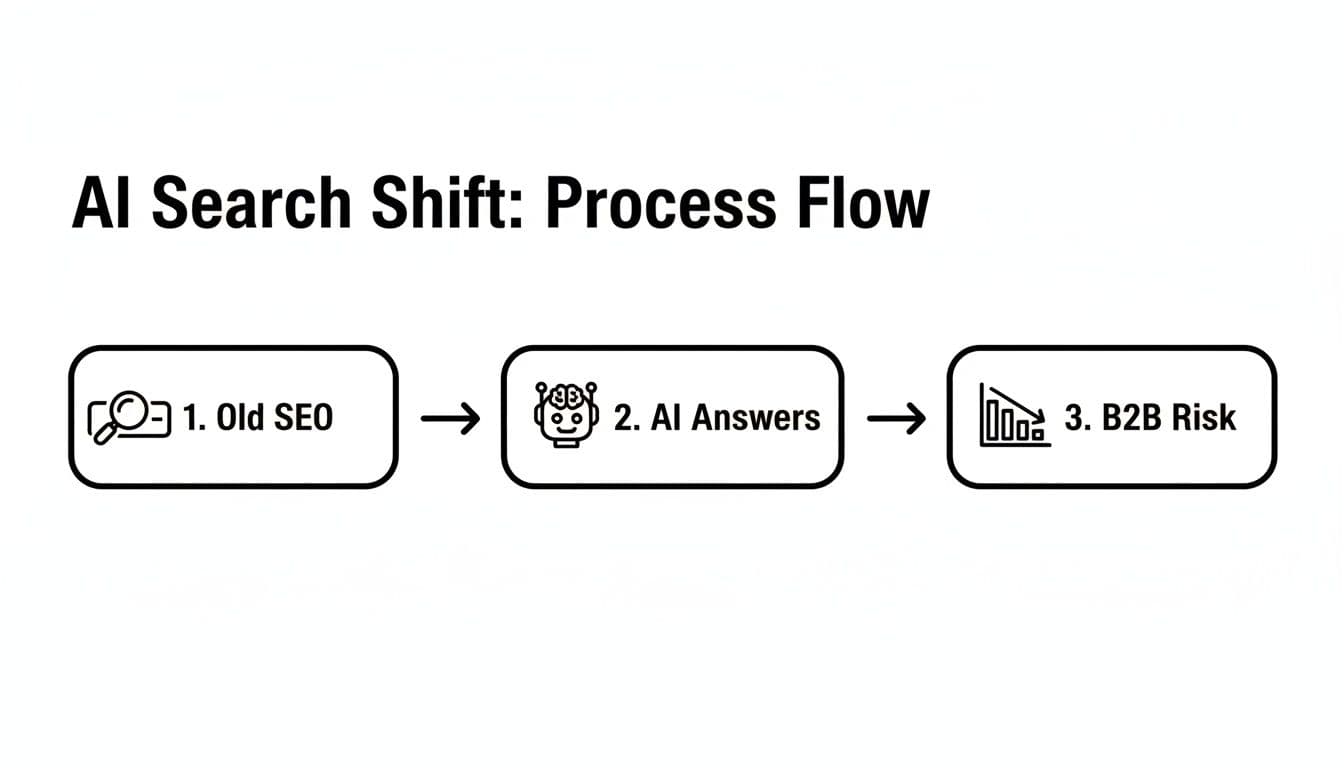
This new path from a simple search to an AI-generated answer creates a massive risk for B2B companies that don't adapt. Your goals are the first step in that adaptation.
How to Scrutinize Agency Case Studies
With your objectives defined, it’s time to start looking at potential partners. Any AI search optimization agency in Spain worth its salt will have case studies, but your job is to dissect them, not just skim them. Look past the shiny, feel-good metrics like "more impressions" and hunt for real business impact.
A compelling case study draws a straight line from the agency's work to the client's revenue. Don't be shy about asking tough questions:
- What was the starting point? Show me the "before" picture. Where was the client in AI-generated answers when you came on board?
- Which specific queries did you go after? If they can't tell you the exact B2B-intent questions they targeted, that's a major red flag.
- How did you prove ROI? I need to see the connection to actual business results. Did they generate more qualified leads? Did the sales cycle get shorter? Did the average deal size go up?
A great agency won't just have this data; they'll be excited to walk you through their process. This isn't a small game we're playing. The SEO services market in Spain is expected to skyrocket, with a projected 19.5% CAGR from 2025 to 2032, fueled almost entirely by AI. In a market handling 3-4 billion searches every month, being invisible is a death sentence.
Assessing Cultural and Linguistic Fit
Technical expertise is critical, but it's only one piece of the puzzle. The Spanish B2B market isn't a single entity; it's a complex tapestry of regional cultures and business norms. An agency that doesn’t grasp this will produce content that feels… off. And "off" doesn't close deals.
An agency’s ability to navigate the linguistic subtleties between Castilian Spanish, Catalan, or Basque can be the difference between a campaign that connects and one that falls flat. This cultural intelligence is a non-negotiable requirement.
Drill down into their local experience. Have they worked with companies in your industry, right here in Spain? How do they tailor their strategies for the business culture in Madrid versus Barcelona? Their answers will quickly tell you if they're a genuine local expert or just a global agency with a Spanish postcode.
To help you organize your thoughts and make a more informed decision, use this checklist as you speak with potential agencies.
Agency Evaluation Checklist
This checklist provides a systematic framework for assessing an agency's suitability, ensuring you cover all the critical aspects from their technical skills to how well they align with your business.
This table isn't just a list of questions; it's a filter. Use it to weed out the talkers and identify the true partners who can deliver tangible results. For more on what effective measurement looks like, take a look at our guide on what an effective SEO report should contain.
Getting Under the Hood: Technical Expertise and Data Strategy
Okay, let's move past the glossy case studies. The real difference between a genuine AI search optimization agency in Spain and an old-school SEO firm with new branding is found in their tech stack and data handling. This is where the rubber meets the road. You need a partner who truly understands how machines read and trust content, not just one who knows how to game a keyword.
A good starting point is to grill them on their tools. How, exactly, are they monitoring your brand’s visibility inside large language models (LLMs) like Gemini or Perplexity? If they can't show you specific platforms or processes for tracking how you appear in AI-generated answers, that's a huge red flag. It means they're essentially flying blind.
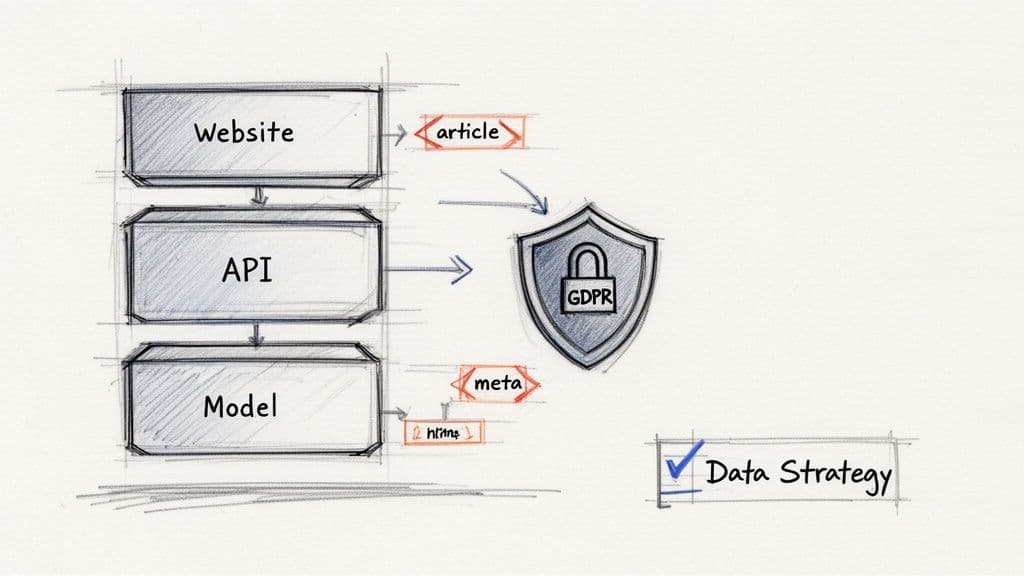
How They Handle Structured Data
This is a big one. AI doesn't "read" your website like a person. It ingests it, parsing for clean, structured information to make sense of who you are and what you do. This is where semantic HTML and structured data (Schema markup) come into play.
Any decent agency will talk about Schema. A great one will show you a sophisticated strategy that goes way beyond just marking up your company address.
Ask them to walk you through how they would use schema to define your company as an entity, connect your products to specific problems, and flag your content as the authoritative answer for key industry questions. Their response should feel strategic and be directly connected to your business objectives, not just a technical checklist. For a deeper look at the kind of technical groundwork involved, our guide on analyzing log files for SEO insights can give you some context.
The game has changed. We're no longer just trying to rank a URL. The new goal is to make individual facts on your site—a key statistic, a product spec, a unique benefit—so clear and credible that an AI model will confidently cite it in a generated answer.
Vetting Their Data Privacy and AI Ethics
Now for the most critical part, especially in Europe. The agency's data strategy is paramount. With GDPR as the law of the land and Spain's new Artificial Intelligence Supervisory Agency (AESIA) establishing local oversight, there is zero room for error.
You have to ask the tough questions about data, and you need clear, confident answers.
- How do you guarantee your data collection and analysis are fully GDPR-compliant? They should be able to articulate their privacy protocols clearly and without fumbling.
- What's your policy on using our company's data to train your own AI models? You need absolute transparency here. Your proprietary data should not become their R&D asset without your explicit consent.
- How do you account for and mitigate potential bias in the AI tools you deploy? A forward-thinking agency will have a documented framework for responsible and ethical AI use.
A truly capable AI search optimization agency in Spain isn't just effective; it's also a safe steward of your data. Their commitment to ethical practices and regulatory compliance is what will shield your brand from very real legal and reputational harm down the line.
Navigating Cost Models and Local Market Nuances
Figuring out what you'll actually pay for AI search optimization can feel intentionally confusing. A good proposal should make the value crystal clear, not hide it behind complicated terms. Generally, you'll run into a few common pricing structures, each with its own pros and cons for your business.
Many agencies lean on a monthly retainer. You pay a set fee each month for an agreed-upon scope of services. This model is great for predictable budgeting and building a long-term, in-depth partnership. The catch? It hinges on a huge amount of trust and really well-defined KPIs to make sure you're seeing a continuous return on that investment.
Then there's the performance-based model. With this setup, the agency's pay is directly linked to hitting specific goals—things like securing a certain number of featured snippets or driving a measurable lift in leads from AI chat assistants. It’s a great way to tie their success directly to yours, but be careful it doesn't incentivize them to chase short-term wins at the expense of your long-term strategy.
Realistic Investment Benchmarks for Spain
Spain’s market for sophisticated digital services is heating up. Fast. The Search Engine Optimization Advertising Software Market here hit USD 2.524 billion in 2024 and is on track to more than double to USD 5.348 billion by 2033. This isn't just a trend; it's a massive shift.
This explosive growth signals a powerful demand for expertise, and a sharp AI search optimization agency in Spain is perfectly placed to capitalize on it. We've seen that companies dragging their feet on adopting AISO strategies stand to lose as much as 20-30% of their visibility in this new search reality. You can find more detail on the Spanish SEO software market growth on reedintelligence.com.
So, what kind of budget are we really talking about for 2026?
- Project-Based Work: For a one-off engagement, like a deep-dive AISO audit, you should probably set aside between €4,000 to €10,000.
- Monthly Retainers: A full-service retainer with a skilled agency will usually land in the €5,000 to €15,000+ per month range, shifting based on the complexity and scope of your needs.
Always remember this: the cheapest option is almost never the best. Hiring a low-cost agency that doesn't get the technical and cultural layers of AISO in Spain will be the most expensive mistake you make.
The Critical Importance of Cultural Intelligence
Beyond the numbers and technical talk lies something that can genuinely make or break your success in Spain: authentic local knowledge. I'm not just talking about speaking Spanish. It's about having a deep-seated cultural and linguistic intelligence.
A successful campaign needs a partner who gets the subtle but vital differences in business etiquette between Madrid and Barcelona. They need to be able to navigate regional languages like Catalan, Basque, or Galician without just plugging phrases into a translation tool. That kind of fluency is what builds real connection and trust.
You can learn more about how geo-specific metrics impact AI search visibility in our detailed article. When you're thinking through different engagement models, it's also helpful to compare approaches like staff augmentation vs. managed services to see which fits your internal structure best.
The In-House Alternative: AISO Platforms
Hiring a full-service agency isn't the only game in town. For a lot of businesses, especially those with a solid marketing team already in place, an AISO platform can be a much smarter, more cost-effective move. This isn't about outsourcing; it's about empowerment. You get to take the driver's seat on your AI search strategy.
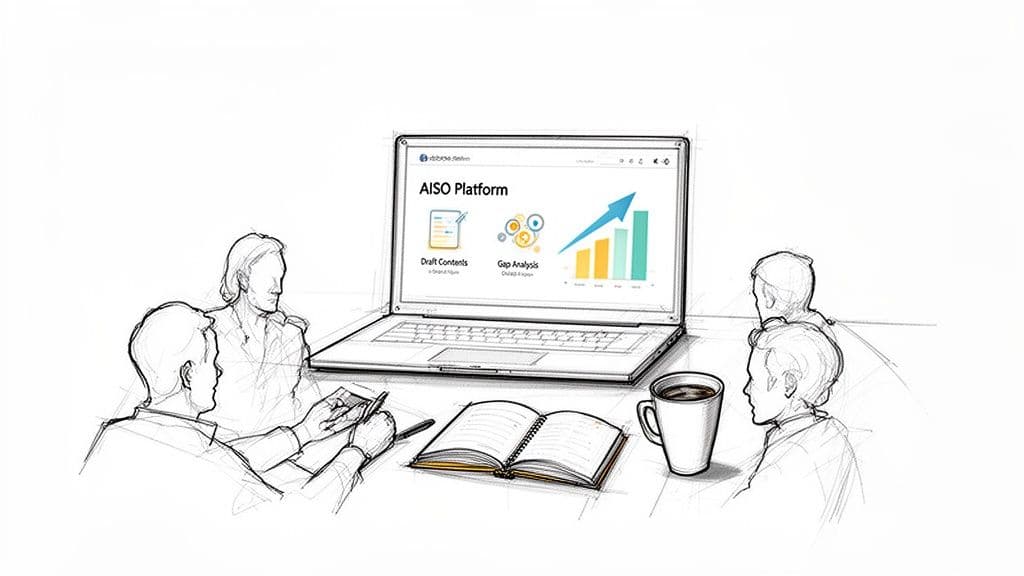
Take a look at a platform like Attensira, for example. The dashboard lets your team see exactly how your brand is showing up in AI answers, translating what would be a mountain of messy data into clear, actionable insights. No intermediary needed. That direct line of sight is a massive advantage you just don't get with a typical agency setup.
Platforms like this are built to fill the gap between what your team can already do and what AI search now demands. They handle the grunt work—tracking your brand mentions across different LLMs, flagging weak spots in your content, and even drafting optimized copy. This frees up your team to focus on what they do best: strategy and execution.
When a Platform Makes More Sense
So, how do you decide between a platform and an ai search optimization agency in Spain? It really boils down to your team's bandwidth, your specific goals, and, of course, your budget. Going with an in-house platform often delivers a better ROI if your company prioritizes a few key things:
- Direct Data Control: You get to keep all performance data and strategic insights under your own roof. This means total confidentiality and immediate access whenever you need it.
- Cost Efficiency: Over the long haul, you'll likely spend less by investing in a tool and your team's growth instead of paying ongoing agency retainers.
- Agile Integration: AISO tasks can slot directly into your existing marketing and content workflows, with no need to coordinate with an outside team.
- Team Empowerment: You're building up your own people, turning them into in-house AISO experts who know your brand and market inside and out.
For many B2B companies I've worked with, the sweet spot is actually a hybrid model. You could use a platform for the daily grind of monitoring and content work, but keep a strategic consultant on call for high-level guidance. It’s a great way to get the best of both worlds—giving your team the right tools while still having that expert sanity check.
Choosing a platform-led strategy is an investment in your team's future capabilities. It transforms AISO from a mysterious outsourced service into a core, manageable part of your marketing operations, giving you a sustainable competitive edge.
At the end of the day, you want to build an AISO function that can grow and adapt with your business. An agency brings instant expertise, but a platform builds that knowledge directly into your company for the long term. If you're ready to see what software is out there, our guide to the best AI SEO software is a good place to start for a full comparison. It'll help you make the right call based on your team's size and where you want to be a year from now.
Common Questions About AI Search Optimization in Spain
As B2B leaders in Spain start to wrap their heads around AI-driven search, a lot of good questions come up. It's a new frontier, after all. Before you put a budget behind it, you need clarity. Let's tackle the most common questions we hear from companies just like yours.
What Is the Real Difference Between SEO and AISO?
It's easy to assume AISO is just the latest buzzword for SEO, but that's a mistake. They're playing two completely different games with entirely different goals.
Classic SEO is all about climbing the ladder of a search engine results page (SERP). The entire strategy revolves around keywords, backlinks, and technical site health to earn a spot on that list of blue links. Your success is measured by your rank.
AISO, on the other hand, is about becoming the raw material for the answer itself. The goal is to be a citable, authoritative source that AI models like ChatGPT and Perplexity can trust and quote directly. This means your content has to be built on a foundation of structured data, semantic relevance, and entity recognition. The AI has to understand what you're talking about and trust its accuracy.
Simply put, SEO gets your website on the list; AISO gets your brand in the answer. That’s the core distinction, and it's why a specialized AI search optimization agency in Spain has a completely different playbook.
How Long Until We See Results from an AISO Agency?
This is where expectations need to be managed carefully. AISO can deliver results faster than the long, slow grind of traditional SEO, but it’s definitely not an overnight fix. The results also look different.
You can often spot early signs of traction within the first 1-3 months. This usually looks like your brand getting mentioned in AI chat responses for very specific, long-tail questions after an agency rolls out initial content updates and schema markups.
But building the deep authority needed to become the go-to source for a wide range of valuable topics? That's a longer play. For a real, measurable business impact—like a noticeable uptick in qualified traffic from AI platforms or leads telling your sales team they saw you in an AI answer—you should realistically be looking at a 4-6 month timeframe. A good agency will set clear short-term metrics and long-term business KPIs from day one.
What Should We Budget for an AISO Agency in Spain?
In 2026, investing in AISO is a strategic move, not an experimental one, and the pricing reflects that. The cost structure for a dedicated AISO partner in Spain is different from what you might be used to with legacy SEO services.
Here’s a practical breakdown of what you can expect:
- Project-Based or Limited Scope: If you’re looking for a focused audit or a campaign targeting a very narrow set of queries, monthly retainers often start in the €2,500 - €4,000 range.
- Full-Service Partnership: For a comprehensive strategy that weaves together deep analytics, ongoing content optimization, and technical implementation, be prepared to invest €5,000 to €15,000+ per month.
Of course, the price tag will depend on the agency's track record and the actual scope of work. The key is to focus on the potential ROI. As many have learned the hard way, a cheap agency that doesn't deliver is the most expensive option in the long run.
Can We Use a Platform Instead of an Agency?
Absolutely. For many B2B companies, especially those with some in-house marketing muscle, using a platform like Attensira is often the smarter and more cost-effective route. The choice really boils down to your internal resources and strategic priorities.
An AISO platform makes the most sense if:
- You have an in-house team and want direct control over your data and execution.
- You’re committed to building long-term AISO expertise within your own company.
- Your team is nimble enough to take platform insights and quickly integrate them into your content workflow.
An agency is likely a better fit when:
- You need a fully outsourced service because your team is already stretched thin.
- You’re looking for a broad strategic partner to help guide your entire digital presence.
- You're just starting and need significant hands-on support to get off the ground.
A hybrid approach is also gaining a lot of traction, and for good reason. Many businesses use a platform for daily monitoring and execution while keeping an agency or consultant on retainer for high-level strategy. This model gives you the best of both worlds—powerful tools in the hands of your team, with expert guidance to make sure you're heading in the right direction.
Ready to take control of your AI search visibility? Attensira provides the tools your B2B team needs to monitor your brand's presence in AI answers, identify content gaps, and generate optimized content without the high cost of an agency. Discover how our platform can empower your in-house team today.